
At vero eos et accusamus et iusto odio dignissimos ducimus qui blanditiis praesentium voluptatum deleniti atque corrupti quos dolores et quas molestias excepturi sint occaecati cupiditate non provident, similique sunt in culpa qui officia deserunt mollitia animi, id est laborum et dolorum fuga.
[contact-form-7 404 "Not Found"]

Topsham, the former port of Exeter, has a long and ancient history. Originally a Roman hamlet, as well as an Anglo-Saxon settlement, it is sited on land bounded by the Exe estuary and the Clyst river.
The Exe estuary was once navigable as far as Exeter, though Topsham’s importance increased when Countess Isabella de Fortibus built a partial weir across the river in 1290 to run her mills. This cut Exeter off from the sea and allowed Topsham to control all maritime trade.
Topsham’s town charter dates back to 1300. Its shipyards supplied three boats to sail against the Spanish Armada. The town was an important Royalist stronghold during the English Civil War. Though Exeter recovered some of the maritime trade when it commissioned England’s first ship canal to be cut between Turf Locks and Exeter Quay, Topsham continued to be a seafaring town of some importance. Shipbuilding was an important trade through the 19th century, and ships still came up to Topsham Quay until the end of the 20th century. Maritime trade with the Netherlands is reflected in the Dutch architecture of The Strand.
Topsham today is a part of the city of Exeter. It is a popular place to live as well as to visit. Its location, just two miles off the M5 motorway, midday between Exeter and Exmouth, makes the town easily accessible and it is well served by public transport, including both regular rail as well as frequent bus connections to Exeter and Exmouth.


The Beautiful River Exe Estuary

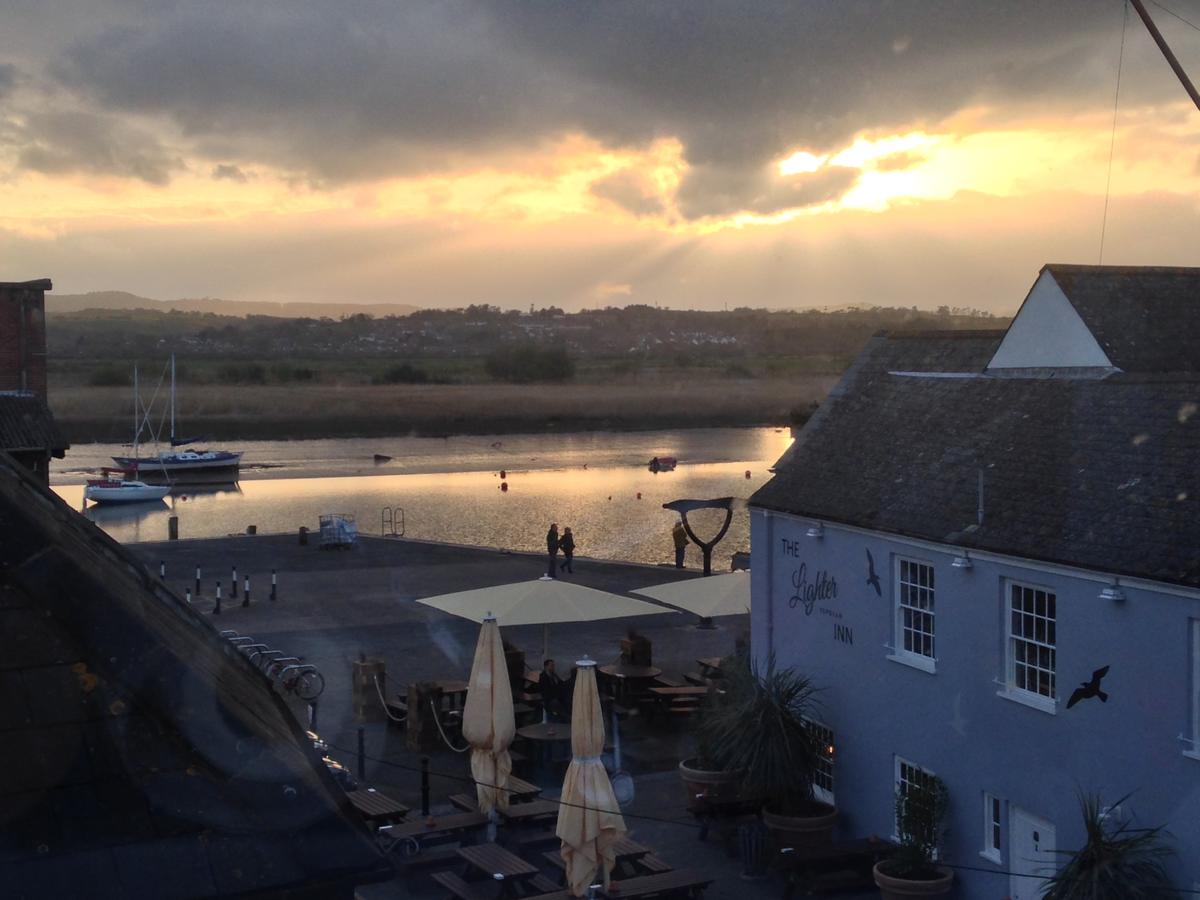
Topsham Town